The AI that actually understands Indian fashion
ShotRoom doesn't treat a lehenga as a 'dress' or a saree as a 'wrap.' It understands Indian ethnic wear from the ground up — the garment types, the fabric behaviors, the embroidery conventions — and uses that knowledge to plan and generate a photoshoot that does your garment justice.
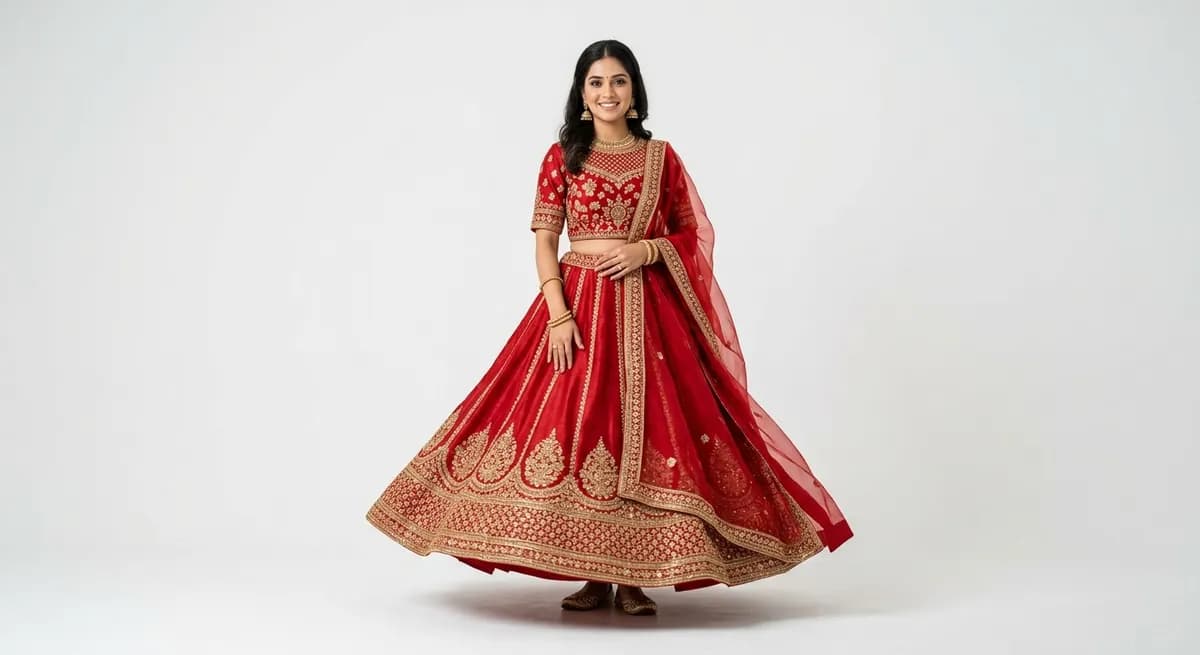
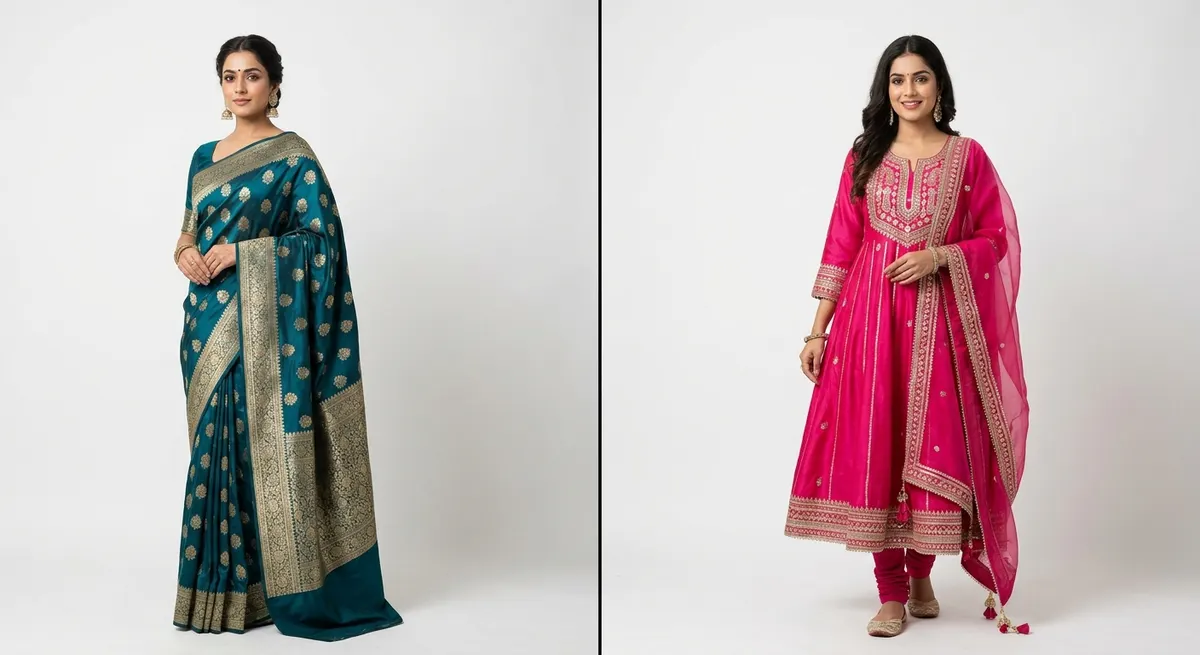
Trained on Indian fashion, not adapted from generic datasets
Generic AI photography tools are trained primarily on Western fashion datasets. When you upload a lehenga, they categorize it as a 'skirt set.' When you upload a saree, they treat it as a 'wrap dress.' The resulting photos miss everything that matters — the pallu drape, the dupatta fall, the specific construction of ethnic silhouettes. ShotRoom is built with Indian fashion taxonomy from the ground up. It distinguishes between a straight-cut kurta and an Anarkali, knows that a lehenga-choli has three distinct components, and understands the styling conventions for each garment category.
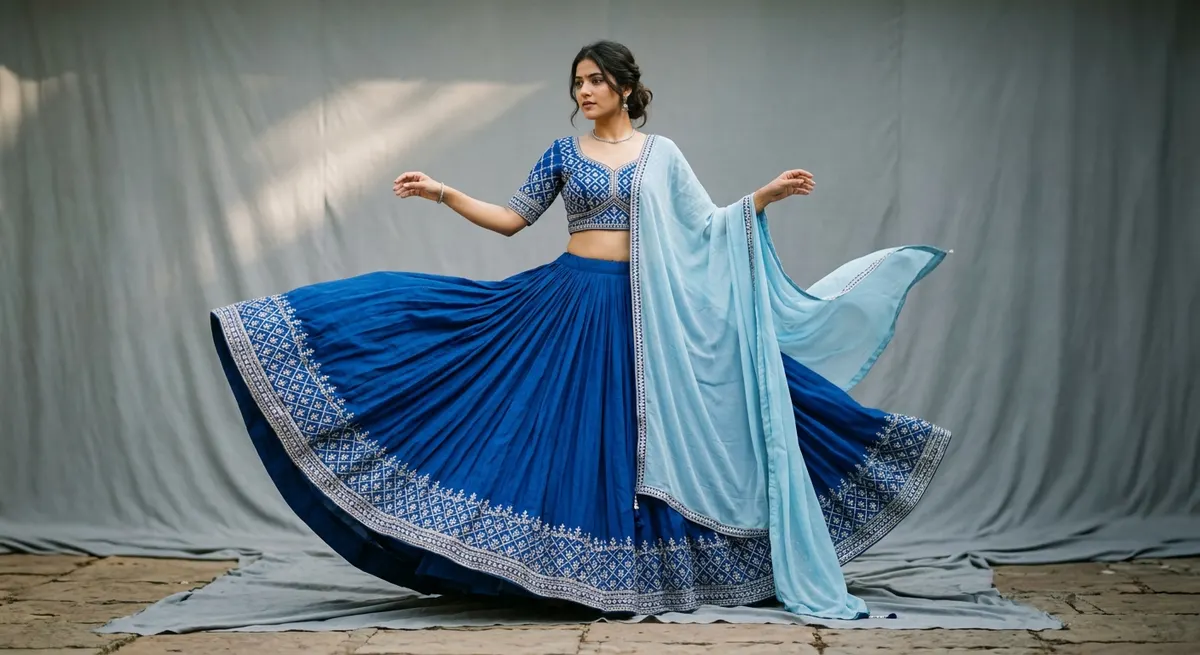
Reads the construction details that define how a garment photographs
A lehenga with a 3-metre flare needs to be posed differently from a fitted A-line skirt. A heavy zardozi dupatta falls differently from a sheer organza one. ShotRoom's structural analysis reads these construction details directly from your product image — it detects flare width, identifies slit positions, spots sheer panels, gauges fabric weight — and uses these findings to plan a shoot that showcases the garment's construction, not just its color. You get poses that show the flare, angles that catch the embroidery, and lighting that doesn't flatten the texture.
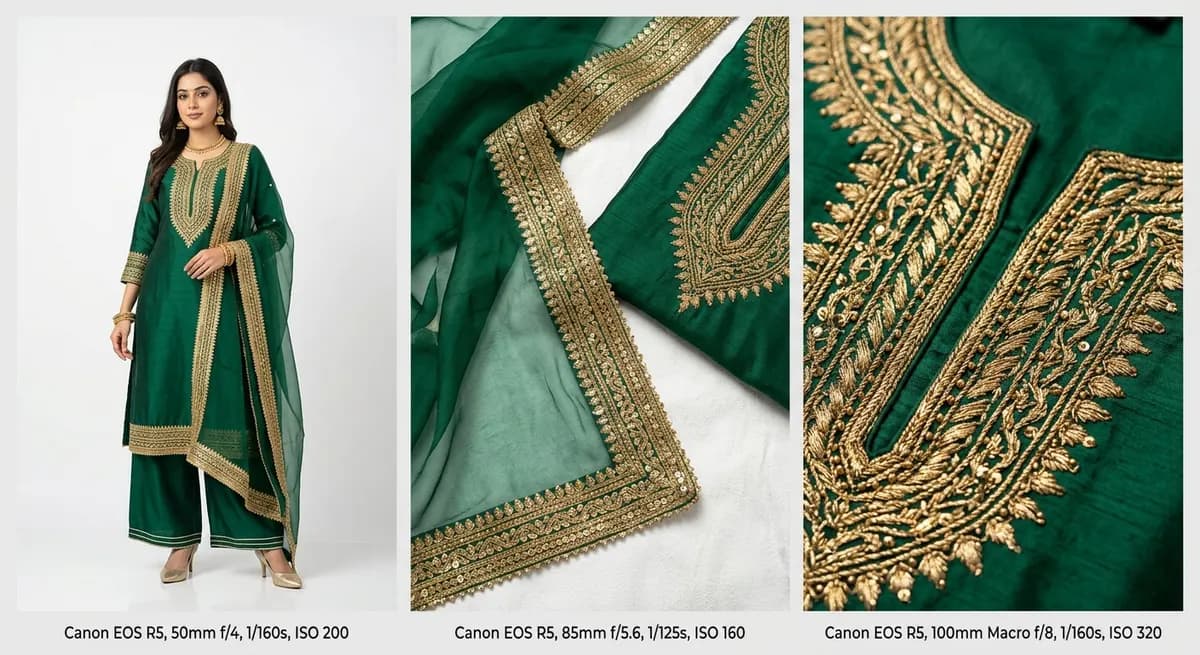
Full outfit shots, component close-ups, and embroidery macro details — all in one session
A complete ethnic wear product listing needs more than one or two pose shots. Premium marketplace categories expect full outfit poses showing the complete styling, component shots for each wearable piece, and macro close-ups of embroidery and fabric detail. ShotRoom's three-category system generates all of this in a single session. Category A gives you front and back plus 4-5 creative poses. Category B gives you each component individually — the blouse, the dupatta, the skirt. Category C gives you the macro close-ups of embroidery zones, fabric texture, and craftsmanship highlights that buyers use to judge quality before purchasing.
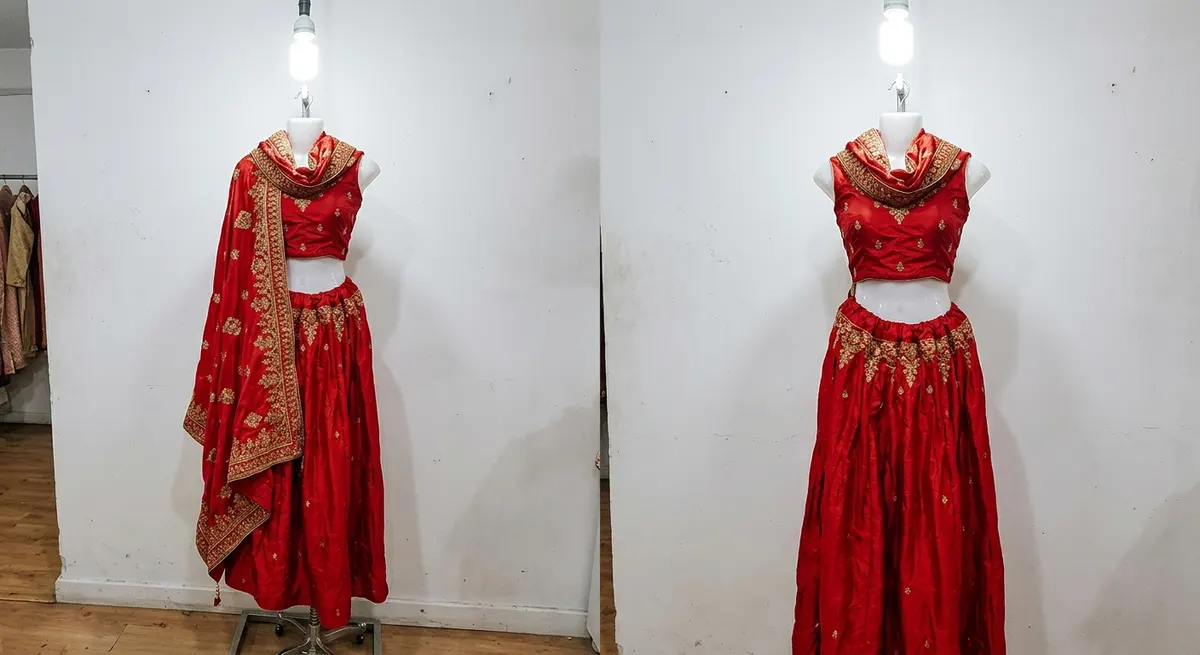 Seller starting point
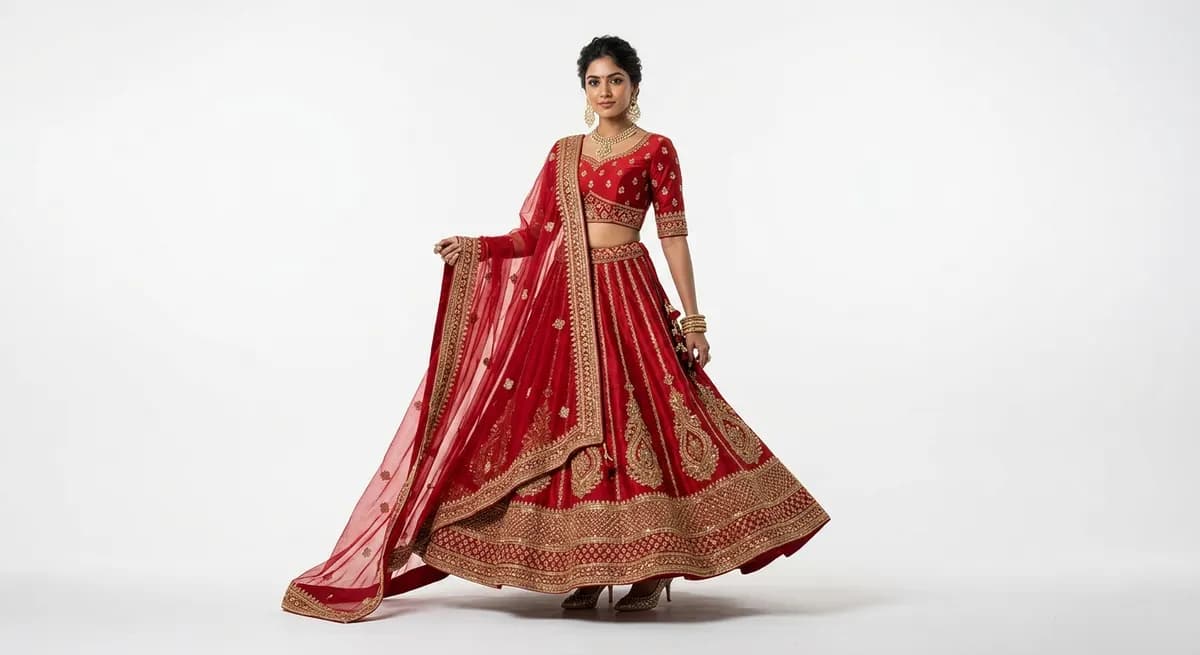 ShotRoom output
Same lehenga. Same upload. A complete editorial photoshoot — full outfit, component shots, and embroidery macro details.
From garment upload to ethnic wear editorial in 4 steps
Upload your garment
Upload a photo of your saree, lehenga, kurta, sherwani, or any ethnic wear piece — flat-lay, hanger photo, or worn by a mannequin. Any quality input works.
AI identifies garment type and features
ShotRoom recognises the specific garment type — not just "dress" but "lehenga-choli with heavy zari embroidery and 3-metre flare." It maps every construction detail that affects how the garment should be photographed.
Receive curated pose recommendations
The AI suggests garment-specific poses based on the identified type and features — the poses that showcase drape, flare, embroidery, and silhouette for that specific piece.
Generate editorial-quality photos
ShotRoom generates full outfit poses, individual component shots (blouse, dupatta, skirt separately), and macro detail close-ups of embroidery, fabric texture, and craftsmanship highlights.
Understands Indian garment taxonomy
Knows the difference between a Banarasi and a Kanjeevaram, what a churidar kurta needs vs a straight-cut, how a sherwani drapes differently from a bandhgala.
Automatic embroidery close-ups
Detects embroidery, zari, gota patti, and mirror work zones and generates dedicated macro shots — the product detail shots that drive conversion for premium ethnic wear.
Three-category photoshoot output
Full outfit poses + individual component shots + macro detail close-ups — the complete image set for marketplace listings, brand lookbooks, and D2C product pages.
Dupatta and accessory pairing
Knows what accessories complement specific ethnic garments — the right bangles with a lehenga, dupatta styling for a palazzo set — and incorporates them into full outfit shots.
Fabric-specific drape accuracy
Identifies fabric type and adjusts the generated drape accordingly — a georgette saree falls differently from a Kanjeevaram, and ShotRoom's output reflects that.
No styling expertise required
The AI carries the styling knowledge. You upload the garment — ShotRoom knows which poses showcase it, how the dupatta should fall, and where to focus the close-up shots.
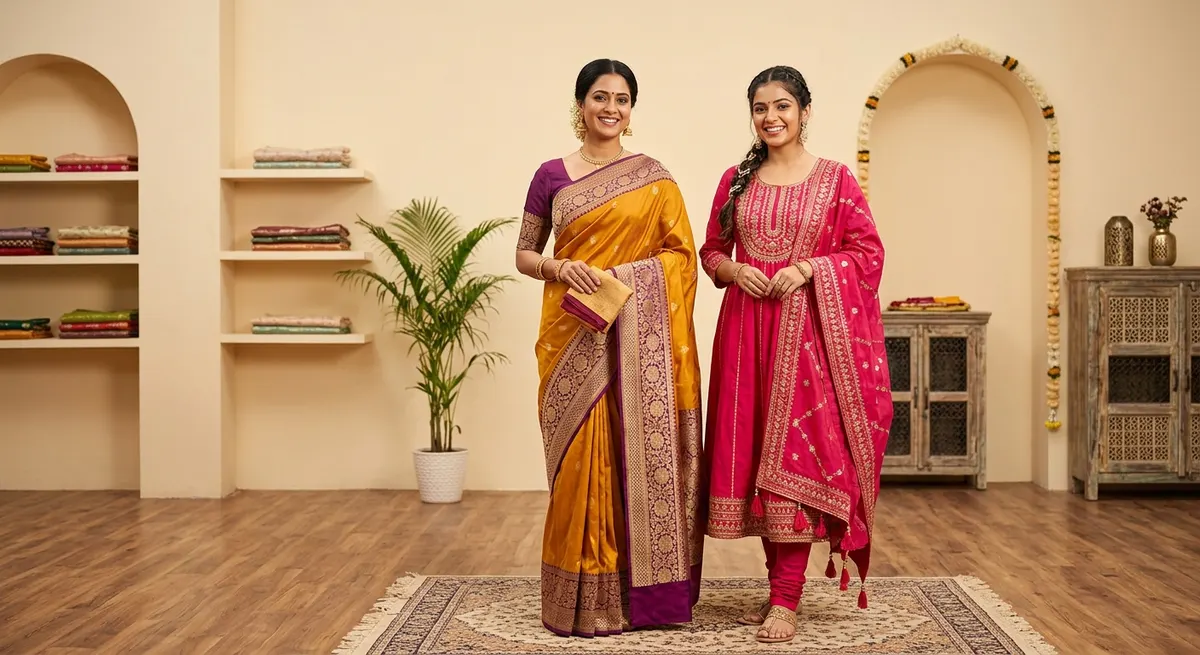
Build your complete ethnic wear catalog faster
Whether you sell sarees, lehengas, kurta sets, or bridal collections, ShotRoom generates the complete image set each garment needs — without a studio, stylist, or professional photographer.
Pair ethnic wear photography with flat-lay to model conversion or consistent model identity for a premium brand look across your entire catalog.
Frequently Asked Questions
Does ShotRoom understand Indian ethnic wear garment types?
Yes — this is the core capability ShotRoom is built around. The AI recognises specific Indian garment types and their construction: sarees (and their draping styles), lehengas (with skirt volume, choli fit, dupatta), kurtas (straight-cut, Anarkali, A-line), sherwanis, salwar kameez sets, and more. It doesn't treat these as "dresses" or "tops" — it understands the specific vocabulary of Indian fashion taxonomy and uses it to plan the shoot correctly.
Can ShotRoom handle saree photography — the draping is very specific?
Saree photography is one of ShotRoom's specialties. The AI understands that saree draping style affects the entire visual composition — the pallu fall, the pleating, the blouse fit. It recommends poses that showcase the pallu drape correctly, shows the fabric texture and zari work in hero shots, and generates component images of the blouse separately. Whether it's a Banarasi silk, a Kanjeevaram, or a chiffon saree, the AI's knowledge of fabric behavior means the drape looks accurate in every generated shot.
How does ShotRoom showcase embroidery and zari work in photos?
Embroidery, zari, gota patti, mirror work, and other handcraft details require macro photography to sell effectively. ShotRoom automatically identifies embroidery zones on the garment — the neckline, the hem, the dupatta border — and generates dedicated close-up shots of these areas. These macro detail photos (Category C in ShotRoom's three-category system) are shot at high resolution specifically to showcase the craftsmanship, not just the overall garment silhouette.
What is ShotRoom's three-category image system for ethnic wear?
Every ShotRoom photoshoot generates three categories of images for maximum marketplace coverage. Category A: Full outfit poses — mandatory front and back shots plus 4-5 creative poses specific to the garment type, with full styling including accessories and dupatta. Category B: Component shots — each wearable component photographed individually (blouse, skirt, dupatta), so buyers can see each piece clearly. Category C: Macro detail close-ups — high-resolution crops of embroidery zones, fabric texture, and craftsmanship highlights. This three-category structure matches the image requirements of premium fashion marketplaces.
Can I photograph a lehenga set with all its components — blouse, skirt, and dupatta?
Yes, and this is where ShotRoom's component labeling system makes a real difference. When you upload a lehenga set, the AI labels each piece — the choli, the ghagra, and the dupatta — and tracks them separately throughout the photoshoot. You get full outfit shots with all three components styled together, individual close-ups of each piece, and macro details of the embroidery on specific components. Buyers who want to see the dupatta border or the blouse neckline work can find those shots easily.
Does ShotRoom understand the difference between different types of Indian fabric?
Yes. Fabric recognition is part of ShotRoom's structural behavior intelligence. The AI identifies whether a fabric is a heavy brocade (which drapes and holds differently from a silk), a lightweight georgette (which moves freely), or a stiff cotton (which holds its shape). This fabric identification affects pose recommendations — a heavy Kanjeevaram silk is posed differently from a flowing chiffon saree — and the generation quality, because the AI adjusts its understanding of how the fabric will look under studio lighting.
What about bridal wear photography — lehengas with very heavy embroidery?
Bridal and heavy embroidery ethnic wear is a specific strength. ShotRoom generates macro close-ups of embroidery zones automatically, and the structural intelligence understands the weight and stiffness of heavily embellished garments. For bridal lehengas with zardozi or heavy stone work, the AI recommends seated or posed shots that showcase the skirt spread, standing shots that show the full silhouette, and multiple close-up zones for the different embroidery panels.
How does ethnic wear AI photography compare to hiring a professional photographer?
A professional photographer with styling expertise for Indian ethnic wear in a major city charges ₹2,000–₹5,000 per look, plus styling and location costs. For a catalog of 50 ethnic wear pieces, the photography budget alone runs to ₹1,00,000–₹2,50,000. ShotRoom generates a complete 12-15 image photoshoot per garment for a fraction of this cost, and can process 10 garments in the time it takes to set up a single studio shot. The output quality is equivalent to professional studio photography for marketplace use.
Ready to photograph your ethnic wear collection?
Upload your first garment and see what ShotRoom builds from it. 20 free credits on every new account.