AI photography built for Indian fashion
Generic AI tools generate images that could belong to any garment. ShotRoom understands the difference between a Banarasi silk saree and a chiffon georgette, knows how a heavy bridal lehenga moves differently from a lightweight anarkali, and captures embroidery detail that lesser tools blur away.
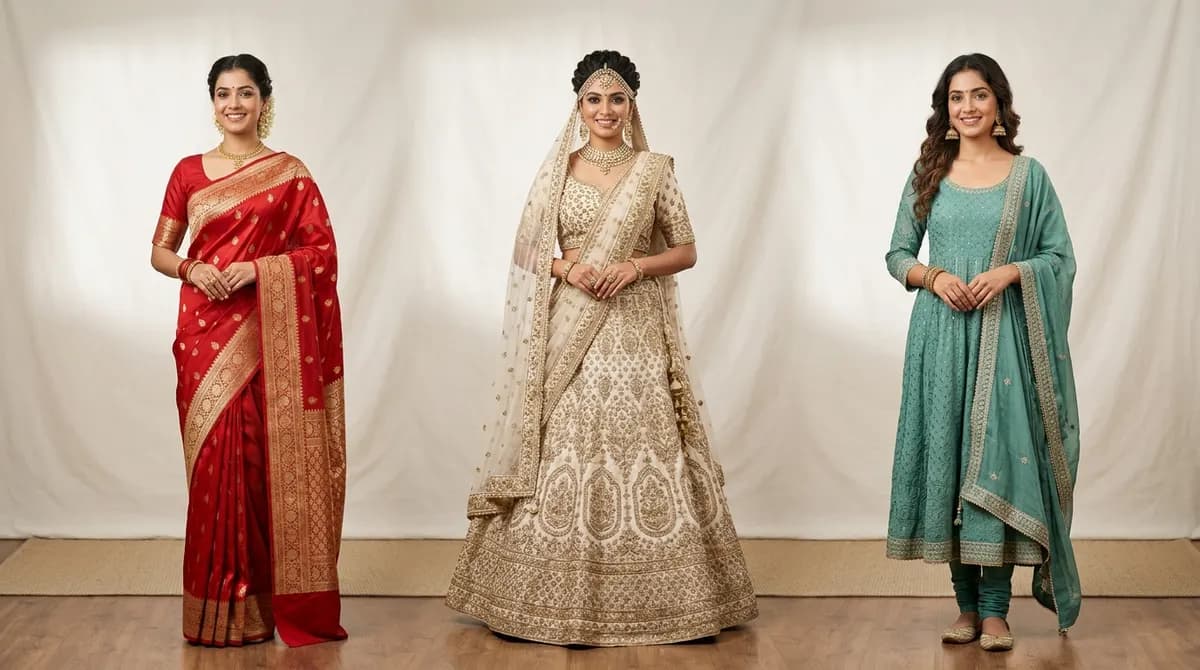
What sets ShotRoom apart for Indian fashion
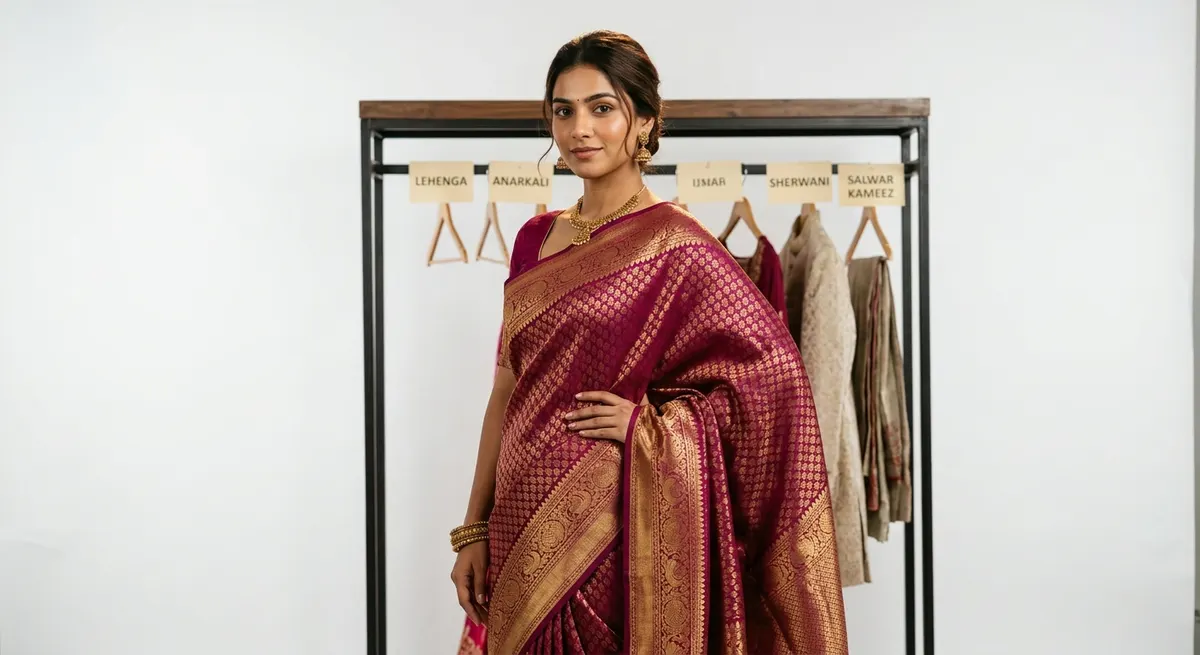
A garment taxonomy that speaks Indian fashion fluently
ShotRoom's AI was trained on the full vocabulary of Indian fashion — not western fashion with Indian categories bolted on. It recognizes lehengas from bridal heavy-work to lightweight party wear. It distinguishes between a Kanjivaram silk, a Banarasi brocade, and a plain georgette saree — and knows the different poses, lighting angles, and detail shots that flatter each. The taxonomy extends to embroidery traditions: gota patti, zari, chikankari, shisha work, resham embroidery, aari work, and thread details that need specific close-up treatment.
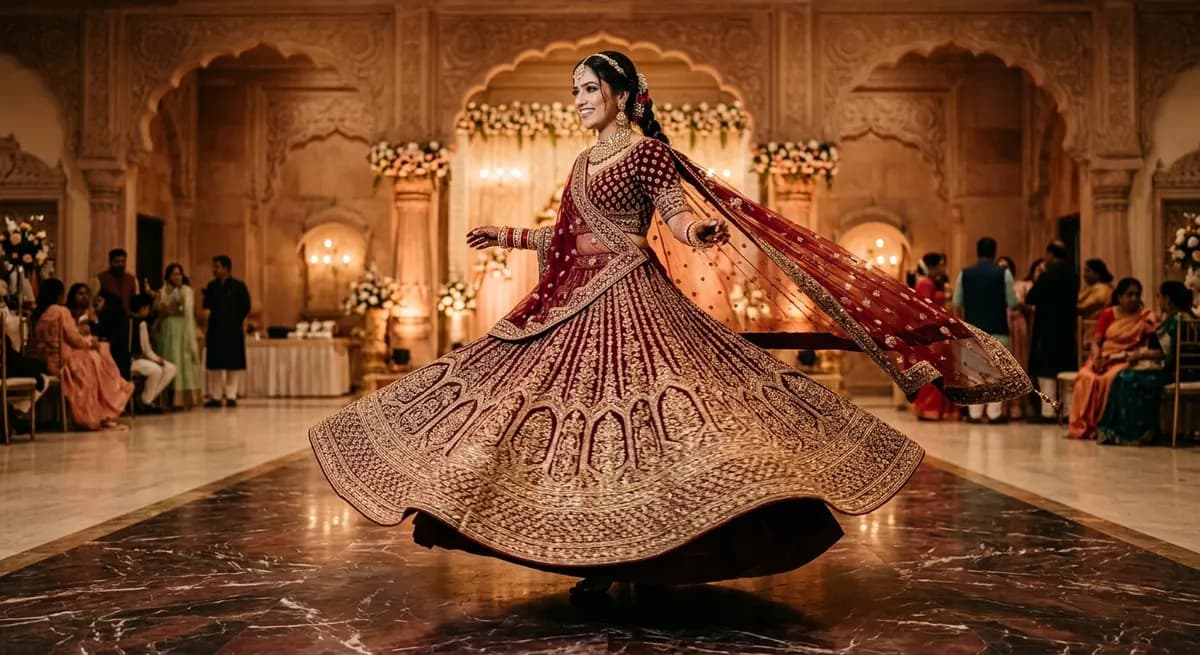
Poses selected for how each garment moves
A heavy bridal lehenga in thick brocade needs a different set of poses than a light chiffon anarkali. ShotRoom analyzes structural features — fabric weight, flare volume, draping behavior, slit position, hem asymmetry — and selects poses that work with the garment rather than against it. A ghagra-choli gets walking poses that show the flare. A fitted anarkali gets poses that reveal the silhouette. A saree gets poses designed around the pallu and drape. This is pose intelligence that no generic AI photography tool offers.
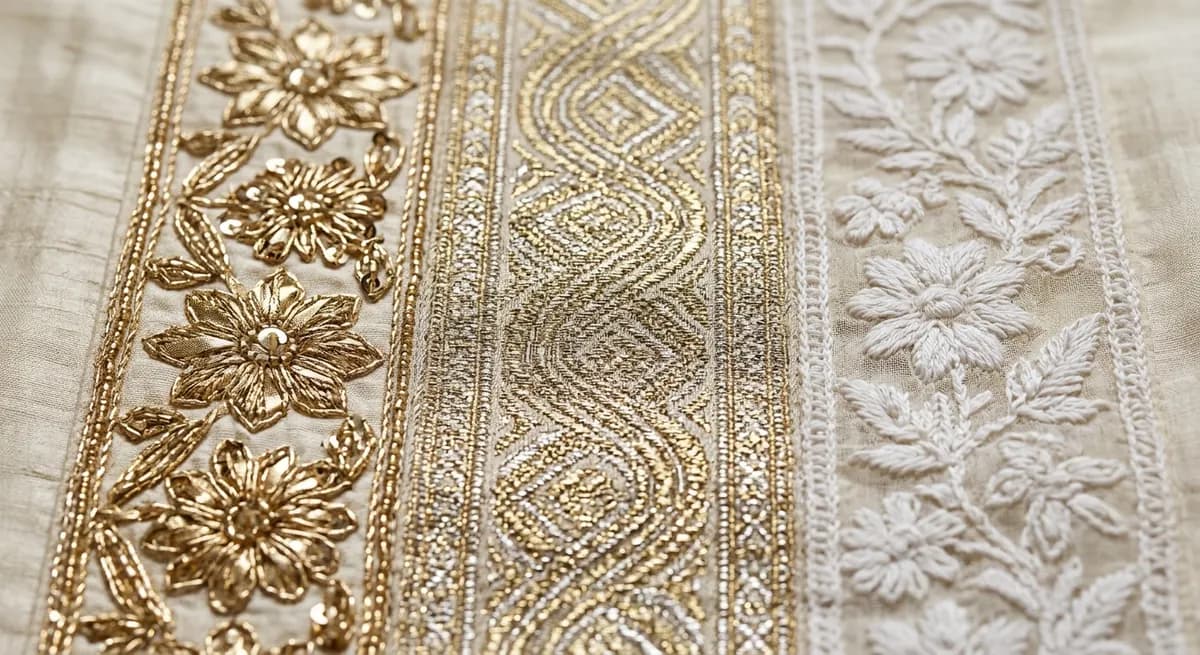
Embroidery and detail close-ups that actually show the craft
The embroidery on a Lucknawi chikankari kurta or the zari work on a bridal lehenga is the reason the customer is buying the garment. Full-body shots can't capture it. ShotRoom's three-category system ensures dedicated macro close-up shots (Cat C) are generated for every significant embroidery zone identified during garment analysis. These close-ups are generated at high resolution with macro-appropriate lighting to show the actual craft — the thread texture, the metallic shine of zari, the dimensional quality of gota patti.
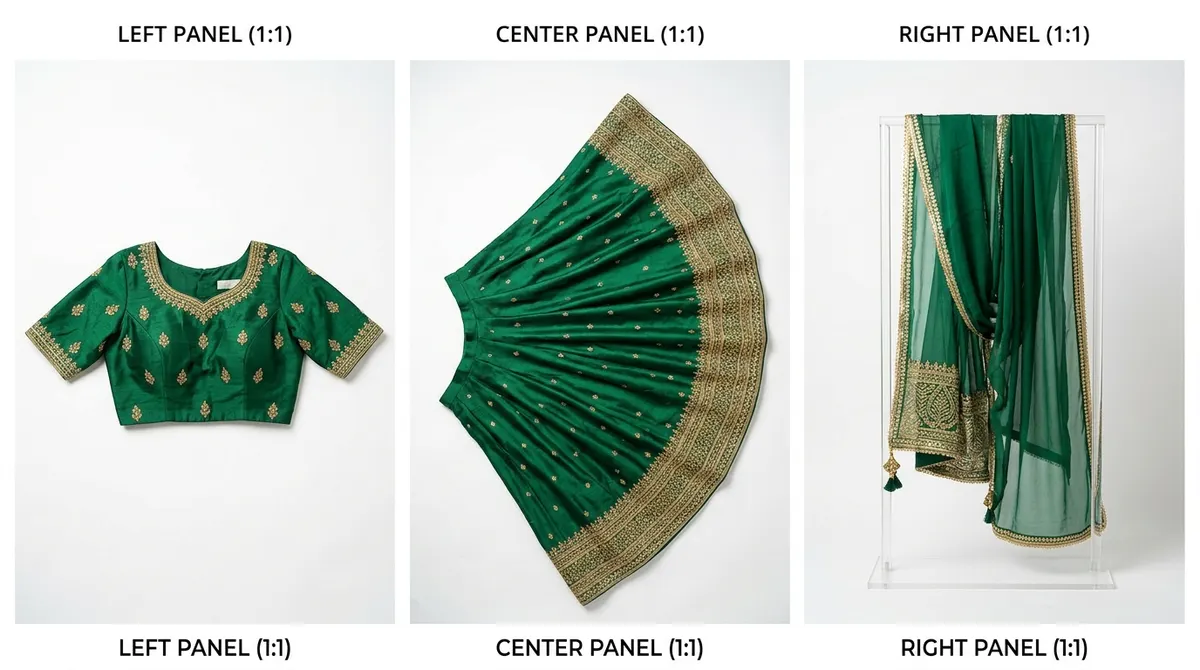
Component-by-component display for multi-piece ensembles
Indian ethnic wear is often multi-piece — a lehenga has a choli, skirt, and dupatta. A salwar kameez has a top, bottom, and dupatta. A sherwani has the jacket, churidar, and optional accessories. ShotRoom generates separate component display shots (Cat B) for each piece, so buyers can evaluate every part of the ensemble individually. This is particularly important for marketplace listings where buyers want to see the blouse styling, the dupatta fabric, and the skirt separately before committing to the full set.
Problems only an Indian fashion AI can solve
These are the challenges that stop generic AI tools — and exactly what ShotRoom was built to handle.
Bridal lehenga drape and movement
ShotRoom detects fabric weight and flare volume, then selects walking, twirl, and movement poses that show how a heavy bridal lehenga moves — the kind of shots that convince buyers that the garment is worth the price.
Embroidery detail lost in full-body shots
Every session includes Cat C macro close-up generation for all identified embroidery zones. Gota patti borders, zari patterns, chikankari white-on-white detail, and shisha mirror work all get dedicated close-ups at macro-appropriate resolution.
Saree draping conventions vary by type
ShotRoom understands that Nivi draping is different from Bengali style, that a Kanjivaram worn for a wedding is presented differently from a casual cotton saree — and generates poses and pallu arrangements that reflect each garment's natural draping conventions.
Dupatta styling varies by outfit type
The AI knows that a dupatta draped over both shoulders suits an anarkali suit differently than the same dupatta worn as a stole over a salwar kameez. Dupatta styling and placement are contextualized to the main garment type.
How ShotRoom handles Indian fashion
Upload Your Garment
Upload a photo of your Indian ethnic or fusion garment. Add multiple references — front, back, dupatta, embroidery close-up — for maximum accuracy in the final output.
AI Identifies Garment Type
ShotRoom classifies the garment type within the Indian fashion taxonomy, detects fabric weight and construction, and maps all embroidery zones and structural features that need dedicated treatment.
Garment-Specific Poses Suggested
Based on garment analysis, ShotRoom suggests poses calibrated to how that specific garment moves and drapes. Heavy bridal wear gets movement shots. Lightweight fabrics get poses that show drape. You review and approve before generating.
Editorial Shots with Detail Coverage
Full outfit editorial shots on model, individual component displays (blouse, skirt, dupatta each photographed separately), and macro close-ups of all significant embroidery and texture zones — all in one session.
Understands Indian fashion deeply
Not trained on western fashion categories. Built from the ground up for the full spectrum of Indian ethnic, fusion, and contemporary fashion with the taxonomy depth that matters for accurate output.
Captures embroidery and threadwork
Dedicated macro close-up generation for embroidery zones means the craft and quality that justify your price point are visible in the listing, not lost in full-body shots.
Garment-type-appropriate poses
Pose selection is driven by how each specific garment type moves and drapes — bridal lehengas, flowing anarkalis, and fitted sherwanis each get the pose treatment that flatters them most.
Multi-piece ensemble coverage
Component-by-component display shots for every piece in the ensemble. Buyers can evaluate blouse, skirt, and dupatta individually — the level of detail that premium marketplace listings require.
Accessory pairing intelligence
Trained on high-end Indian brand photography, ShotRoom knows which jewelry, footwear, and styling choices complement each garment type — bangles, maang tikka, juttis, and more.
Marketplace-ready for Indian platforms
Output meets the image standards for Myntra, Ajio, Nykaa Fashion, Amazon India, and other platforms with specific quality requirements for ethnic and festive wear listings.
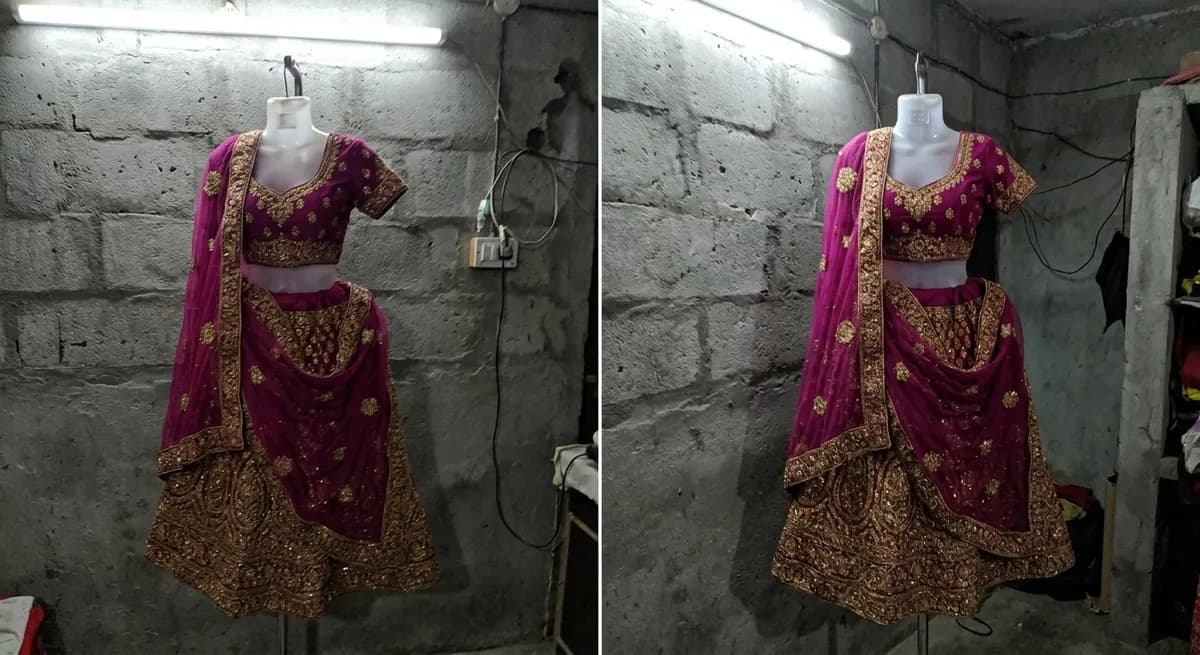 Before: Phone photo
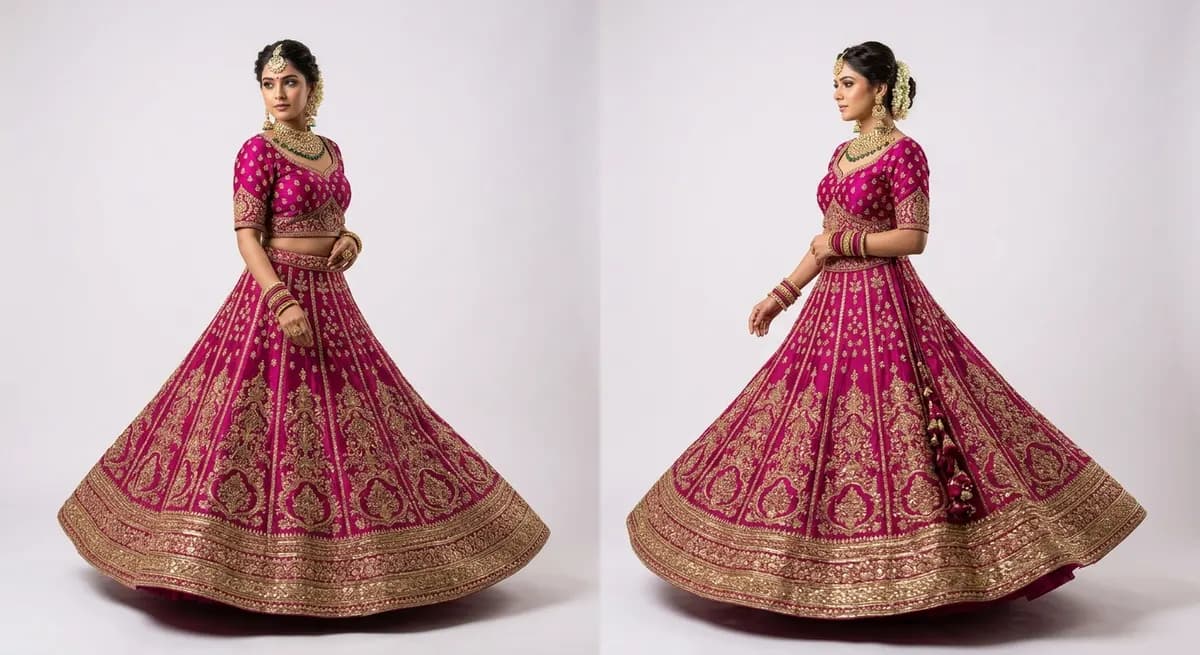 After: ShotRoom AI
Same lehenga, same embroidery — but the ShotRoom output shows the gota patti border, the drape, and the movement that makes the garment worth buying.
Frequently Asked Questions
Can AI really understand Indian fashion like lehengas and sarees?
ShotRoom is specifically trained on Indian fashion — not adapted from a western fashion model. The system has deep knowledge of the garment taxonomy including lehengas (from lightweight party wear to heavy bridal), sarees (distinguishing draping conventions, fabric types, and pallu styles), anarkali suits, straight-cut suits, kurta sets for men and women, indo-western fusion, and formal occasion wear like sherwanis and reception gowns. This domain depth means the AI doesn't treat a Banarasi silk the same way it treats a casual cotton salwar — it makes garment-specific decisions for every session.
How does ShotRoom handle saree draping in photos?
Saree photography requires understanding not just the garment but its draping conventions, which vary by saree type and occasion. ShotRoom's AI understands the Nivi drape (most common, pallu over left shoulder), the Bengali style (pallu draped in the front), and the Gujarati style (pallu in the front), and generates poses that showcase the pallu arrangement correctly. The AI also understands that a six-meter Kanjivaram silk draped for a wedding event should be presented differently from a lightweight georgette saree for casual wear — and adjusts pose selection accordingly.
Will AI capture my embroidery and threadwork detail?
Yes — this is one of the specific differentiators ShotRoom was built to address. During garment analysis, the AI identifies all embroidery zones and flags them for dedicated macro close-up treatment in Cat C generation. Gota patti borders, zari weave patterns, chikankari white-on-white detail, shisha mirror work, and resham thread embroidery all receive close-up shots at macro resolution with lighting tuned to show texture and dimensionality. These images are often the deciding factor for buyers evaluating premium embroidered garments online.
Can ShotRoom photograph both heavy bridal and casual ethnic wear?
Yes. ShotRoom handles the full spectrum from heavy bridal lehengas to everyday kurta sets. The key difference is in how the AI approaches each: heavy bridal wear gets poses that showcase drape, flare, and movement — the features that differentiate premium pieces. Lightweight everyday wear gets poses optimized for silhouette clarity and fabric drape. Both get appropriate embroidery detail coverage. The result is that the same platform that photographs a ₹1 lakh bridal lehenga for a premium boutique also works for a ₹500 casual kurta seller on Meesho.
How does the AI know which poses work for Indian garments?
ShotRoom's structural behavior intelligence analyzes each garment for features that affect how it looks in motion: fabric weight and stiffness, flare volume in the skirt or bottom, presence and position of slits, sheer or transparent panels, asymmetric hems, and dupatta attachment style. These structural features are mapped to a pose library that was built specifically around Indian fashion photography conventions. A full flare lehenga gets a twirl or walking pose to show the spread. A fitted churidar gets a standing pose that reveals the silhouette. The pose recommendation is always derived from what the garment actually needs.
Does ShotRoom work for men's ethnic wear like sherwanis and kurtas?
Yes. ShotRoom supports the full range of men's Indian ethnic wear including sherwanis, bandhgalas, achkan coats, kurta pyjama sets, dhoti kurtas, and indo-western combinations. Men's ethnic wear has its own pose and presentation conventions — formal sherwanis are photographed differently from casual kurtas — and ShotRoom's garment classification handles both. Component display shots separate the sherwani from the churidar and the dupatta or stole, matching the detail expectation of premium marketplace listings for men's festive and formal wear.
Can I get close-up shots of specific embroidery techniques?
Yes. ShotRoom identifies and generates dedicated macro close-ups for specific embroidery and surface decoration techniques. Gota patti — the Rajasthani gold ribbon embroidery seen on bridal lehengas — is one of the most requested. Zari (metallic thread weaving in Banarasi and Kanjivaram silk) gets close-ups that show the gold or silver thread shine. Chikankari (white-on-white hand embroidery from Lucknow) gets close-ups with lighting tuned to reveal the shadow and depth of the stitching. You can also upload a specific embroidery zone as a texture reference to ensure the close-up generation accurately represents the actual detail.
How does AI photography compare to a traditional Indian fashion photoshoot?
A traditional Indian fashion photoshoot — studio booking, professional photographer, model, makeup artist, and post-production — runs between ₹8,000 and ₹30,000 per session and takes 2-5 days from booking to final images. ShotRoom sessions start at ₹299 and deliver final images in under 15 minutes. The key quality differentiator is consistency: every ShotRoom session delivers the same professional quality regardless of photographer availability, model variance, or lighting conditions. For ethnic wear specifically, ShotRoom's domain expertise means it often produces more accurate garment representation than generalist photographers who may not understand the specific features that matter for Indian fashion listings.
Your Indian fashion deserves photography that understands it
Upload your lehenga, saree, or kurta — and get a photoshoot that captures the embroidery, the drape, and the details that make it worth buying.